
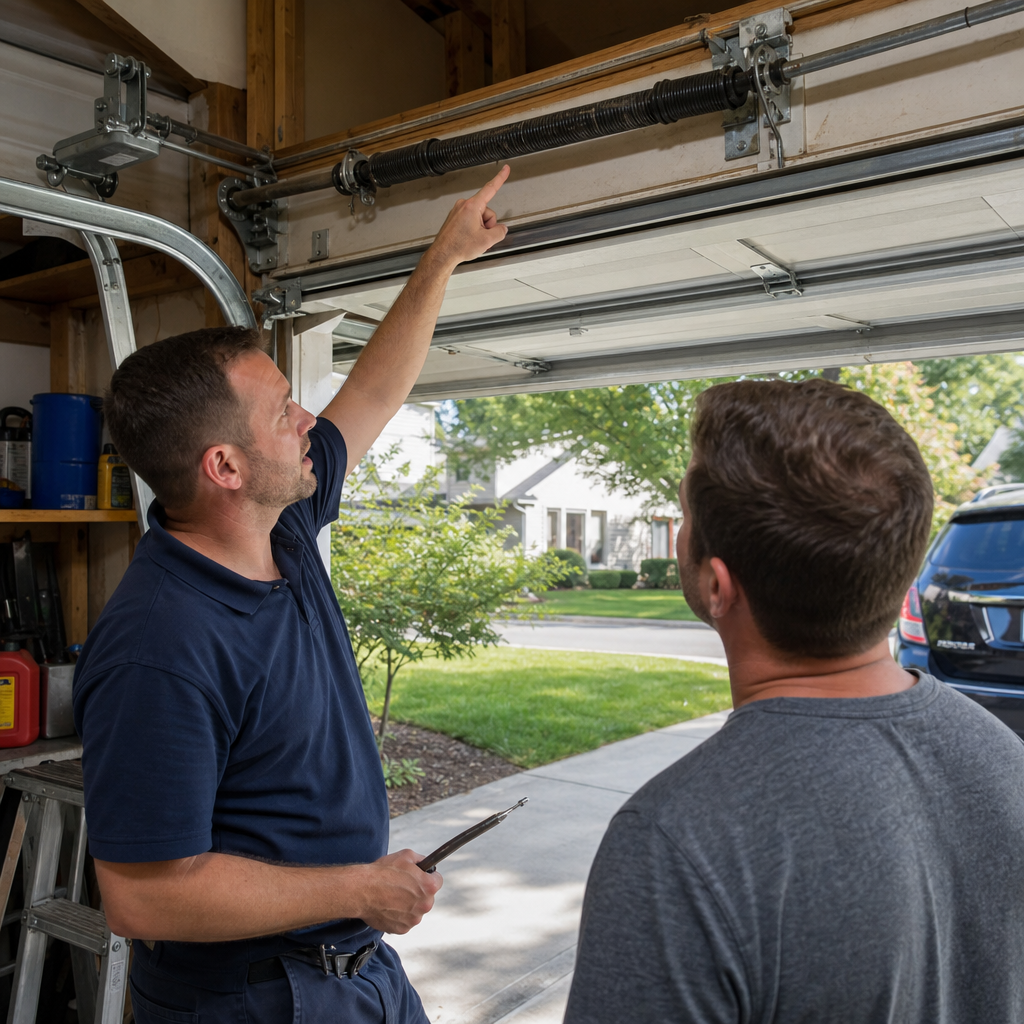
Why Does My Garage Door Reverse in Cleveland? The Real Cause Most Articles Miss
Your garage door reverses because the opener’s safety system detects unexpected resistance or a blocked sensor beam. If that sounds like your door, our Garage Door Repair services can diagnose and fix the issue quickly. In Cleveland, the single most common winter cause isn’t misalignment or a broken part—it’s ice freezing your bottom seal to the concrete threshold, which the opener reads as hitting an obstruction and reverses to protect itself and anything beneath the door. If you’re standing in your driveway at 7 a.m. in January watching the door drop two feet and bounce back up with nothing in the way, that’s almost certainly what’s happening.

We get these calls every winter across Greater Cleveland. The good news: it’s usually a quick diagnosis. The bad news: if you try to “fix” it by cranking up the opener’s down-force, you’re trading a temporary convenience for a genuine safety hazard. We’ve seen the aftermath of that shortcut, and it’s not pretty. Call us at (855) 502-5513 if you want a straight answer on what’s actually happening with your door.
The Cleveland Winter Problem Nobody Talks About: Ice Bond Reversal
Here’s what generic repair articles won’t tell you because they’re written by content farms in warm climates. Cleveland sits on Lake Erie, and that lake-effect snow machine dumps 60-plus inches on us annually. When temperatures swing violently—single digits at dawn, above freezing by afternoon, then back down overnight—meltwater seeps under your bottom seal and refreezes into a solid bond between the rubber and the concrete.
The next morning you hit the button. The opener engages, the door starts down, and two feet from the floor it meets the resistance of that ice bond. Modern openers—LiftMaster, Chamberlain, Genie, the units we work on daily—have a built-in resistance-detection circuit. It feels that load and thinks “obstruction.” The door reverses. It’s doing exactly what it was engineered to do.
The mistake we see constantly, especially in the post-WWII ranch belt through Parma and Garfield Heights where Richard Anderson grew up, is homeowners cranking the down-force adjustment to overpower the ice. Here’s the problem: that adjustment doesn’t know the difference between ice resistance and a child’s bicycle, a pet, or your own foot. If you defeat the safety system for winter convenience, you’ve got a door that’ll crush what it should stop for. We don’t adjust force settings to compensate for ice bonds, and we tell our customers exactly why. For permanent solutions, check out our Best Garage Door Repair in Cleveland, OH.
The real fix is addressing the seal and threshold before next winter hits. In Cleveland’s climate, a worn or inadequate bottom seal isn’t a minor weatherstripping issue—it’s the root cause of repeated reversal calls every January and February. We’ve replaced seals on homes in West Park and Cleveland Heights where the homeowner had called three different companies over two winters, each one adjusting force settings or aligning sensors that were never the problem. For urgent issues, we offer Emergency Garage Door Repair in Cleveland, OH.
When It’s Actually the Sensors: Photo-Eye Diagnosis in Plain Terms
Ice bond is the dominant winter cause, but photo-eye misalignment absolutely does cause reversals year-round. The two small boxes near the floor on either side of your track shoot an invisible beam across the door opening. Break that beam, and the door reverses. Simple enough until you realize how many things can break it without an actual obstruction.
Here’s what to check before calling:
- Dirty lenses: Road salt spray, garage dust, and spider webs coat the lenses. A soft cloth wipe fixes more “mystery” reversals than you’d believe.
- Physical misalignment: Bumping a box with a trash can, snowblower, or bike handlebar knocks it out of true. Both boxes should face each other squarely, usually with a steady LED (not blinking).
- Sun interference: Yes, really. Cleveland’s low winter sun angle—especially afternoon light hitting west-facing doors—can blind the receiver. If your door reverses consistently at the same time of day, sun glare is a real possibility. A simple hood or swapping sender/receiver sides often solves it.
- Loose wiring: Vibration from door operation works connections loose over years. We see this often on older Chamberlain and Craftsman units in Cleveland’s pre-WWII housing stock.
One detail from the field: in Tremont and Ohio City, those narrow alley-accessed garages from the 1920s often have photo-eyes mounted on improvised brackets because the original jambs weren’t designed for modern hardware. The bracket flexes, the alignment drifts, and the reversal seems random. Richard Anderson has measured and fabbed custom brackets for these openings more times than he can count—it’s the kind of thing you only learn after 14 years of working the actual houses in this city.
Force Settings and Spring Tension: The Mechanical Causes
When a door reverses at the exact same point every time, and it’s not winter, and the sensor LEDs are steady, you’re looking at a force or spring issue. The opener’s force settings tell it how much resistance is normal for your specific door. Set too low, and normal operation triggers reversal. Set too high, and the safety system is effectively defeated.
Spring tension is the other variable. Torsion springs above the door do the heavy lifting; the opener just guides. When springs weaken—accelerated in Cleveland by salt corrosion that shortens hardware life well below national averages—the opener picks up more load than it expects. That extra resistance reads as obstruction. We see this constantly on 60-70-year-old attached garages in Euclid and Garfield Heights, where original springs are decades past replacement.
Typical repair costs when mechanical issues are the culprit:
| Service | Price Range in Cleveland |
|---|---|
| Spring Repair | $180–$340 |
| Opener Repair | $120–$320 |
| Track Realignment | $120–$240 |
| Roller Replacement | $110–$220 |
| General Garage Door Repair | $150–$600 |
We don’t quote force-setting adjustments as standalone services because they’re not. If your force needs adjustment, something changed—spring tension, track alignment, hardware wear—and masking it with a screwdriver twist is malpractice. Richard Anderson puts it this way: “I show up, I fix it right, and I tell you what I actually found—not what makes the invoice look bigger.”
A Cleveland Homeowner’s Decision Tree: What to Check First
After fourteen years of emergency calls across this city, here’s the triage logic we wish every homeowner had:
Is it January or February and below 20°F? Check for ice bond first. Look at the bottom seal and the concrete threshold. If you see ice, don’t force the door. Don’t adjust settings. Clear what you can safely, or call for a seal assessment before next winter.
Is a sensor LED blinking? That’s your photo-eye telling you it’s lost alignment. Check for obvious bumps, dirt, or sun glare at that time of day. If nothing obvious, the wiring or the eye itself may need replacement.
Does it reverse at the exact same point every time? Force setting or spring tension. This needs professional evaluation—spring work especially, because a failed torsion spring under tension is genuinely dangerous.
Does it reverse randomly, different spots, different times? Intermittent wiring fault, failing circuit board in the opener, or a binding roller catching unpredictably. These are the trickiest; they require systematic testing, not guessing.
The seasonal pattern is real and predictable. Our reversal calls cluster hard in January and February, drop in March, spike again with early freeze-thaws. Repeat offenders—same house, same call, two winters running—almost always have a seal or threshold problem that was never properly addressed. In Cleveland’s lake-effect climate, that’s not maintenance upsell; it’s physics.
When to Call a Pro (And What to Expect)
We’re not going to tell you to call us for a dirty photo-eye lens you can wipe yourself. But we will tell you when DIY ends and professional work begins:
Don’t touch: Torsion springs. The energy stored in a wound torsion spring can cause serious injury or death if released improperly. This isn’t cautionary boilerplate—we’ve seen the results of well-meaning homeowners using wrong tools. Cable work, bottom bracket replacement, and force-setting adjustments on high-tension systems also belong in this category.
Call for assessment: Recurring reversals you can’t diagnose, any reversal involving unusual noise or vibration, or ice-bond issues that keep coming back. The fix might be a seal upgrade, a threshold modification, or in older Cleveland housing stock, addressing frame settlement that’s thrown off the entire door geometry.
When Richard Anderson shows up—because as owner and lead technician, he’s the one who shows up—he’ll diagnose before quoting. That means testing the door balance, inspecting springs and cables for corrosion (accelerated here by road salt), checking opener function across all safety systems, and explaining what he found before any work starts. Our Garage Door Repair in Cleveland covers the full scope of what that assessment includes.
Landmark works on LiftMaster, Chamberlain, Genie, Raynor, and the other major brands daily. Whatever opener you have, we’ve diagnosed its reversal behavior before. Our 364 verified reviews averaging 4.9 stars reflect that consistency—neighbors across Cleveland who got the same technician-owner showing up, explaining honestly, and fixing it without padding.
FAQs
The most common cause in Cleveland winters is ice bonding the bottom seal to the concrete threshold, which triggers the opener’s safety reversal as if it hit an obstruction. Photo-eye misalignment, dirty lenses, sun glare, or incorrect force settings are the other frequent causes. If it’s below freezing and the reversal happens first thing in the morning, check for ice before anything else. For off-track problems, see our Garage Door Off Track Repair in Cleveland, OH. Call (855) 502-5513 for a free estimate if you can’t identify the cause.
Most reversal-related repairs in Cleveland fall between $150 and $600, depending on the root cause. Sensor realignment or cleaning might be on the lower end; spring repair runs $180–$340, opener repair $120–$320, and seal or threshold work varies with materials. We diagnose before quoting, so you’ll know exactly what you’re paying for. Call (855) 502-5513 for an exact quote—estimates are free.
You can safely clean photo-eye lenses, remove visible obstructions, and clear light ice from the threshold. Do not attempt to adjust force settings to overpower resistance, and never work on torsion springs or high-tension cables yourself—the injury risk is serious and real. If the cause isn’t obvious after basic checks, call a professional. Call (855) 502-5513 and we’ll diagnose it properly.
Cleveland’s lake-effect freeze-thaw cycle creates ice bonds between the bottom seal and concrete that don’t occur in warmer months. When temperatures swing from single digits to above freezing and back, meltwater refreezes under the seal. The opener detects that resistance and reverses. The permanent fix is seal and threshold improvement, not repeated force adjustments. We see this pattern every January and February across Parma, West Park, and throughout Greater Cleveland.
If you’d rather have it looked at, Landmark Garage Door Installation Greater Cleveland offers a no-pressure assessment in Cleveland—call (855) 502-5513.
Written by Richard Anderson, Owner & Lead Technician at Landmark Garage Door Installation Greater Cleveland, serving Cleveland, OH.